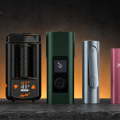


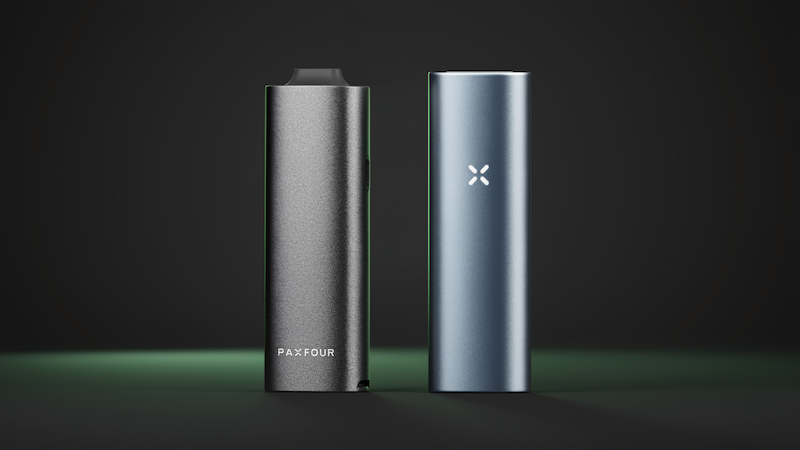
PAX has changed quite a bit over the last year.
The PAX FLOW moved away from the tighter draw traditionally associated with PAX, introducing a much more open airpath, hybrid heating and five Heat Modes. Then came the PAX FOUR, promising something slightly different: more power and denser vapour in a lighter, more familiar PAX design.
So, does newer mean better?
Not necessarily.
The short answer: the PAX FOUR is likely the better choice if you prioritise dense vapour, portability, battery life and a straightforward everyday device. The PAX FLOW makes more sense if you value open airflow, longer draws, more heat-mode flexibility and compatibility with PAX’s Bong Mode.
There is considerably more separating these two than their similar appearance suggests.
In this comparison, we’re looking at PAX’s official specifications, independent testing and what owners are actually saying about living with both devices.
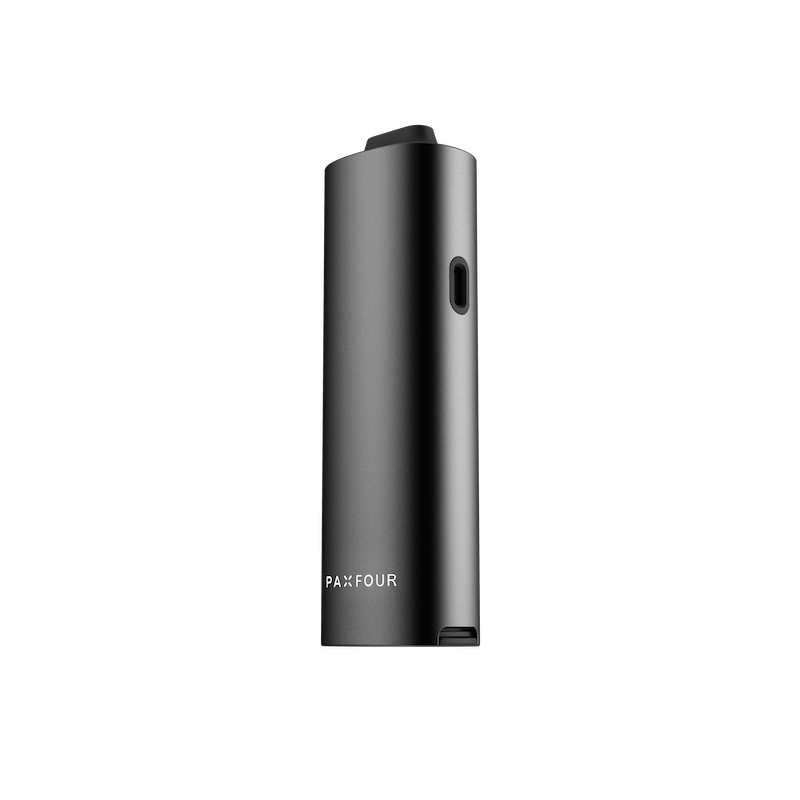
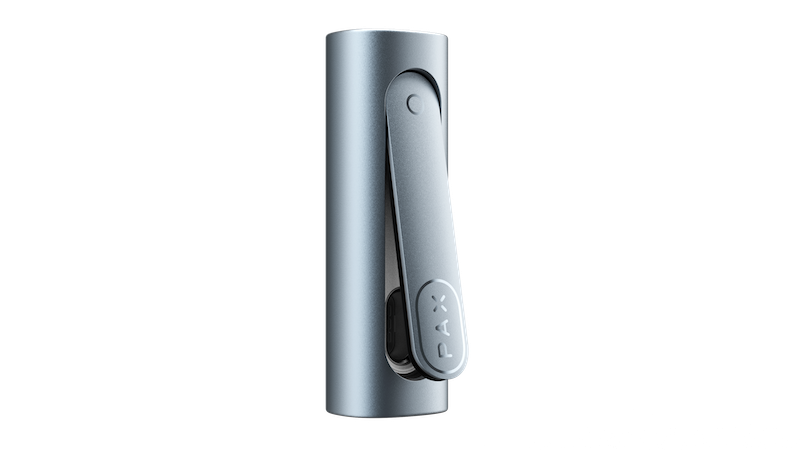
PAX FOUR vs PAX FLOW: Quick Comparison
PAX describes both devices as using hybrid heating, combining conduction and convection. Where they differ is what PAX has designed each system to accomplish.
| Feature | PAX FOUR | PAX FLOW |
|---|---|---|
| Heating | Hybrid | Hybrid |
| Heat Modes | 4 | 5 |
| Best For | Dense vapour & portability | Airflow & draw experience |
| Oven | Bottom-loading redesigned oven | Side-mounted oven |
| Charging | USB-C | Fast USB-C |
| Battery | Up to 5 sessions / 50 minutes | Varies by Heat Mode and usage |
| Charging Speed | — | Under 40 minutes claimed by PAX |
| Bong Mode | No | Yes |
| Concentrate insert | Not compatible | Dry herb only |
| Standard warranty | 2 years | 2 years |
| Extended warranty | Up to 3 years after qualifying registration | Up to 4 years after qualifying registration |
EVERTREE QUICK VERDICT
Choose PAX FOUR for dense vapour, portability and a straightforward everyday device.
Choose PAX FLOW if open airflow, longer draws and greater flexibility matter more.
FLOW is built heavily around airflow.
Its redesigned airpath, side-mounted oven and hybrid heater allow significantly freer draws than traditional PAX devices.
FOUR is built more around power in the classic PAX format.
PAX says its redesigned high-output hybrid heater produces 50% more vapour than the PAX 2, PAX 3, PAX PLUS, PAX MINI and PAX FLOW.
That’s an important detail.
It would be easy to assume that the FLOW automatically produces more vapour. According to PAX’s current claim, it doesn’t.
It’s closer to:
vapour output and portability vs airflow and flexibility.
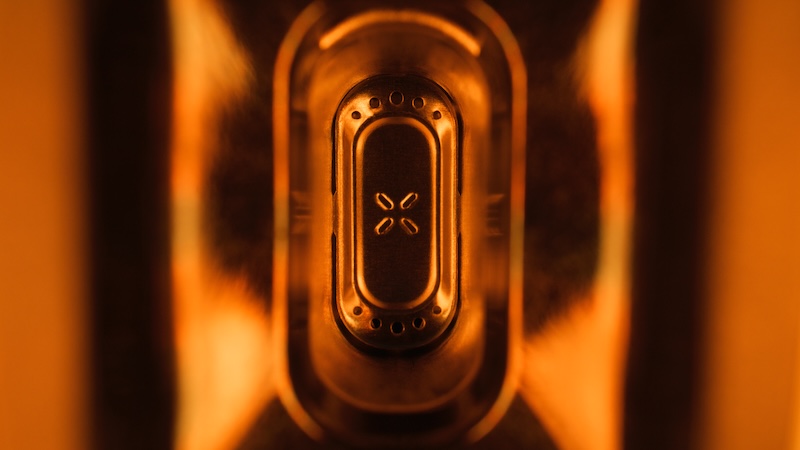

Heating System: PAX FOUR vs FLOW
Both vaporizers use what PAX officially describes as hybrid heating.
That means combining elements of conduction — where the oven itself transfers heat into the material — and convection, where heated air passes through it.
The FLOW was a significant departure from previous PAX models in this respect. PAX says its re-engineered oven combines conduction and convection while adapting to the user’s draw.
The FOUR also introduces a redesigned hybrid heater.
And this matters particularly if you’re upgrading from something like a PAX 3.
The FOUR isn’t simply a PAX 3 with USB-C.
PAX has changed the heating system, oven, airflow and power delivery.
There has been some debate among experienced PAX owners online about exactly how convection-heavy the FOUR’s hybrid system is in real-world use. Some owners feel it still behaves much more like a traditional conduction-focused PAX.
That’s worth knowing, but it shouldn’t be confused with an established specification. PAX officially describes the FOUR as a hybrid vaporizer.
Which Produces More Vapour?
This is where the FOUR gets interesting.
PAX’s headline claim for the FOUR is 50% more vapour compared with its previous dry-herb models, including the FLOW.
That’s a manufacturer claim, but there is some independent evidence supporting the broader point.
GreenState tested the FOUR alongside the FLOW and found the FOUR produced substantially larger clouds at higher settings. Interestingly, its reviewers also preferred the FOUR’s flavour at higher temperatures.
That doesn’t automatically make the FOUR better.
The FLOW delivers vapour differently.
Our takeaway?
If your definition of performance is dense vapour from a small portable device, the FOUR has the advantage on paper and performed extremely well in independent testing.
If you care more about how freely you can draw and how the device responds to longer inhalations, FLOW remains very compelling.
Airflow: This Is Where FLOW Fights Back
Airflow is arguably the single biggest reason to choose FLOW.
Older PAX devices developed a reputation for having a relatively restricted draw.
FLOW changed that dramatically.
Its widened airpath is designed to allow substantially more air through the device, and independent testing backs this up.
That’s a fundamentally different experience from the traditional PAX approach.
FOUR has improved airflow too. Its redesigned oven and lid are specifically intended to increase airflow compared with earlier designs.
But FLOW remains the model built most heavily around unrestricted drawing.
Choose FLOW if:
You prefer a very open draw and want to take longer, freer draws.
Choose FOUR if:
You prefer the familiar PAX experience but want substantially more performance from it.
Flavour: Is FLOW Actually Better?
This one isn’t as straightforward as the marketing might suggest.
FLOW has been positioned heavily around flavour, airflow and control.
Its hybrid heating system dynamically responds to the draw, and the open airpath allows plenty of fresh air through the oven.
That should make FLOW the obvious flavour winner.
Except independent testing complicates the story.
When GreenState compared the two, its reviewers actually preferred the FOUR’s flavour at higher settings and described its flavour performance extremely positively.
That’s only one review, so we wouldn’t declare FOUR the universal flavour winner.
Taste is inherently subjective.
What it does show is that choosing FLOW solely because you assume FOUR sacrifices flavour for clouds probably isn’t necessary.
FOUR appears capable of doing both extremely well.
Heat Modes and Temperature Control
Both devices keep things simple.
There is no large display or complicated menu system.
PAX FOUR
FOUR offers four Heat Modes with PAX’s patented temperature control.
GreenState reported the four presets at approximately:
- Mode 1: 190°C / 374°F
- Mode 2: 200°C / 392°F
- Mode 3: 210°C / 410°F
- Mode 4: 220°C / 428°F
The temperatures are intentionally quite high, which aligns with FOUR’s emphasis on denser vapour.
PAX FLOW
FLOW gives you five Heat Modes.
Its additional trick is its highest-powered mode, designed for pairing the device with PAX’s compatible water-pipe setup.
That gives FLOW considerably more flexibility if you enjoy using a vaporizer through glass.
For most people using their PAX normally, however, four modes on the FOUR should be plenty.
Bong Mode: A Big FLOW Advantage
If you want to run your PAX through glass, this is one of the clearest differences.
FLOW has a dedicated high-temperature mode designed specifically for this purpose.
Independent testing measured that mode at around 225°C / 437°F and found it was designed to push maximum vapour through a compatible water setup.
FOUR doesn’t have the equivalent fifth mode.
For most buyers, that probably isn’t a deal-breaker.
For someone specifically buying a PAX to use with glass, however, FLOW is clearly the more interesting option.
Battery Life and Charging
Battery life and charging reveal another important difference between the two.
PAX rates the FOUR for:
Up to five sessions or approximately 50 minutes of runtime from a full charge.
It also finally uses convenient USB-C charging.
FLOW also uses USB-C, but its biggest battery advantage is charging speed.
PAX says FLOW can reach a full charge in under 40 minutes.
So there is a trade-off:
FOUR → longer advertised runtime.
FLOW → exceptionally quick recharging.
If you’re away from a charger for most of the day, we’d lean towards FOUR.
If you’re frequently near USB-C power anyway, FLOW’s fast charging reduces the significance of its shorter runtime.
Loading and Cleaning
PAX has improved both devices here.
FOUR returns to the more traditional bottom oven but redesigns its shape and lid.
PAX says this makes loading easier while improving airflow, and the simplified oven is also designed to make cleaning less fiddly.
FLOW takes a different approach entirely.
Its oven is positioned on the side of the device, and the oven door can be completely removed.
More importantly, the airpath can be accessed from the oven right through to the mouthpiece.
That makes routine maintenance extremely straightforward.
If you absolutely hate cleaning vaporizers, we’d give FLOW the edge.
FOUR is simple.
FLOW is simply more accessible.
Portability and Design
This has always been one of PAX’s strongest areas.
You can immediately recognise both as PAX devices.
No huge battery tubes.
No giant screen.
No complicated controls.
Just a clean, discreet portable vaporizer.
FOUR is particularly interesting because it manages to deliver its increased performance without abandoning that classic format. Independent testing also found it noticeably lighter than FLOW.
FLOW remains pocketable, but it’s the more substantial of the two.
If your vaporizer spends most of its life in your pocket, FOUR is probably the more natural choice.
Does the PAX FLOW Get Hot?
Potentially, yes.
This is something worth knowing before buying.
PAX itself currently recommends using FLOW with a grip sleeve.
That doesn’t make FLOW unusual among powerful compact vaporizers — you’re putting a substantial heater and battery inside a relatively small metal body.
But if you regularly run long, high-temperature sessions, we’d consider the grip sleeve more of a sensible addition than an optional cosmetic accessory.
What Are Actual PAX Owners Saying?
Specifications only tell half the story.
So we also looked through discussions from people who have used PAX devices extensively.
And opinion is definitely divided.
One owner who tested FOUR and FLOW side-by-side felt PAX could almost have skipped FLOW entirely. They preferred FOUR’s flavour and vapour despite its lower positioning in the range.
Other long-term PAX owners are considerably less convinced.
Some PAX 2 and PAX 3 users argue that the older devices still do everything they need and don’t see enough reason to upgrade. Others are particularly interested in FLOW because its freer draw represents such a large departure from older PAX models.
That’s actually a useful way of looking at these devices.
FOUR feels like PAX perfecting its traditional portable formula.
FLOW feels like PAX deliberately trying to change that formula.
Which one is better depends heavily on which of those things you actually want.
Should PAX 3 or PAX PLUS Owners Upgrade?
This is probably a more important question than FOUR vs FLOW for many existing owners.
If your PAX 3 or PLUS is working perfectly and you’re happy with its vapour and draw, there is no urgent reason to replace it simply because something newer exists.
However, there are meaningful upgrades.
FOUR makes sense if you want:
- USB-C instead of older charging arrangements
- substantially increased vapour output
- improved airflow
- a redesigned oven
- hybrid heating
- a familiar PAX form factor
FLOW makes sense if you want:
- a dramatically more open draw
- hybrid heating
- easy airpath access
- very fast USB-C charging
- water-pipe-focused functionality
- an experience deliberately different from older PAX devices
If your biggest complaint about your existing PAX is draw resistance, we’d look seriously at FLOW.
If you basically love your old PAX and simply want a more powerful modern version of it, FOUR makes more sense.
Warranty: There’s Another Difference
Both devices come with a standard two-year PAX limited warranty in the UK/EU.
However, eligible owners can extend those warranties by registering their devices within the required period.
FLOW can qualify for two additional years, potentially taking its coverage to four years in total under PAX’s current UK/EU terms.
Check the applicable PAX warranty terms when purchasing because eligibility and regional conditions can change.
This is one area where FLOW has a genuine advantage for someone planning to keep their device for several years.
PAX FOUR vs FLOW: Which Should You Buy?
There’s no need to overcomplicate this.
Buy the PAX FOUR if you want:
Power.
It’s the model we’d look at if you want dense vapour without giving up the small, discreet design that made PAX popular in the first place.
It also makes sense if battery life, portability and simplicity are higher priorities than specialist features.
The FOUR particularly suits someone upgrading from an older PAX who essentially wants:
“What I already like — just considerably better.”
Buy the PAX FLOW if you want:
Airflow.
FLOW’s biggest achievement isn’t necessarily producing the largest cloud.
It’s changing how a PAX feels to inhale from.
The much freer airpath, longer comfortable draws, five Heat Modes, removable side oven and water-pipe-focused functionality make it the more versatile and unusual of the two.
It’s the PAX we’d choose for someone whose biggest criticism of older PAX devices was always:
“I wish it wasn’t so restricted.”
Evertree’s Verdict
The interesting thing about the PAX FOUR isn’t that it replaces FLOW.
It doesn’t.
Instead, PAX now has two premium portable vaporizers built around noticeably different priorities.
The PAX FOUR takes the classic PAX idea and pushes its performance much further. It’s compact, simple, has better advertised runtime and, according to PAX, produces more vapour than any of its previous dry-herb models — including FLOW. Independent testing so far has also been extremely positive about both its vapour production and flavour.
The PAX FLOW is the more adventurous device. Its open airpath, side-mounted oven, extremely quick USB-C charging and additional Heat Mode give you an experience that feels further removed from previous PAX generations.
So our verdict is:
For most people looking for a powerful, portable everyday PAX → PAX FOUR.
For people who specifically prioritise airflow, longer draws and greater flexibility → PAX FLOW.
Neither is objectively better.
They’re simply better at different things.
PAX FOUR vs PAX FLOW FAQs
Is PAX FOUR newer than PAX FLOW?
Yes. FLOW arrived first, while PAX FOUR launched in March 2026.
Does PAX FOUR use hybrid heating?
Yes. PAX officially describes the FOUR as using a redesigned hybrid heating system. This combines conduction and convection heating.
Does PAX FLOW have better airflow?
FLOW is the more airflow-focused device. Its widened airpath was specifically designed to provide a much freer draw than traditional PAX vaporizers, and independent reviewers have praised its open airflow.
Which produces more vapour: PAX FOUR or FLOW?
According to PAX, FOUR produces 50% more vapour than its previous dry-herb devices, including FLOW. Independent GreenState testing also found FOUR produced larger clouds at higher settings when the two were compared directly.
Does PAX FOUR have Bong Mode?
No. FLOW has five Heat Modes, including its high-powered mode designed for use with a compatible water-pipe setup. FOUR has four Heat Modes.
Can PAX FOUR use concentrates?
PAX states that FOUR is not compatible with the PAX Concentrate Insert.
Is PAX FLOW dry-herb only?
Yes. FLOW is designed for dry herb. Independent product documentation and testing confirm it isn’t designed for concentrate inserts.
Which has better battery life?
PAX advertises FOUR at up to five sessions or 50 minutes per full charge. FLOW’s battery life will vary depending on Heat Mode and usage, while its advantage is extremely fast charging — PAX states it can reach 100% in under 40 minutes.
Is the PAX FOUR worth upgrading to from a PAX 3?
It depends on what you want to improve. FOUR introduces USB-C charging, a redesigned oven, improved airflow, hybrid heating and significantly increased claimed vapour production. However, owners who remain satisfied with their PAX 3 may not find upgrading essential.